Write! Write! Write!
Chapter 16 02-07-2024

Hey there Project: Writers,
We are counting down to the finish Line for all our Project: Cat 2024 submissions. So far we only have two stories turned in. C’mon gang lets start typing.
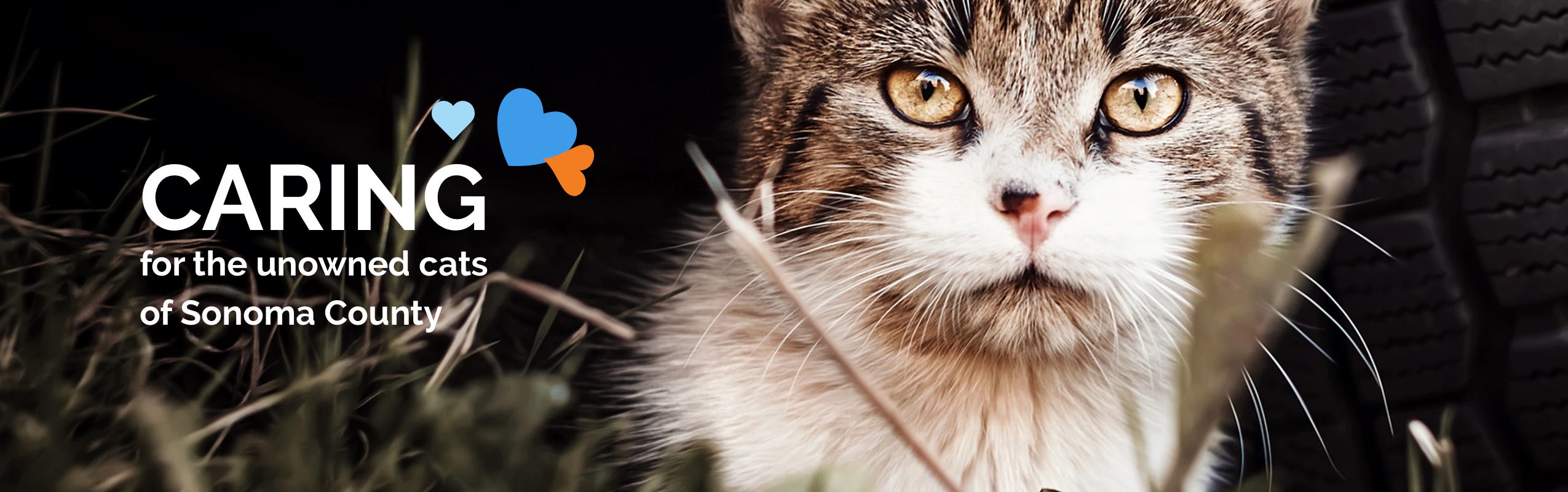
I’m proud to announce that all proceeds will go to Forgotten Felines of Sonoma County. A proud charity that helps saves kitty lives.
https://www.forgottenfelines.com/
So since I was having a difficult time deciding what to write I choose to do a random pick from the “Save The Cat” stories genre. Lucky me I choose the “Fool Triumphant” this should be fun.
So we are a few authors shy for this years project, we are still on the look out for enthusiastic authors that can deliver a short story around 3,000 words give or take. Pass the word around and tell them to submit to projectwriter2022@gmail.com and to do it by March 1st.
This year the following authors have committed to contributing. So cool.
Katherine Elizabeth
Nikki Postan
Abic Geoffrey
Andrew Biltz
Keith Carmona
Maureen “Mo” Whelan
Wyatt G. Bessing
Alberto Melendez
Brian Evans
Tara Camgross
Garth Haslam
Isuel Maehwa
Kathy Bottarini
Auburn Doherty
I’m really looking forward to see what kind of stories will be set forth from all our awesome creators.
Peace and Love
Project: Writer 2024
Ps.
Here are the 10 story genres for Save The Cat.
Considered one of the oldest and the most primal type of story, MITH contains a “monster” who is supernatural in powers (this power can be insanity, not necessarily magical) and is evil at its core; a “house” – an enclosed space containing a family unit, a town, or a world; and a “sin” – someone who is guilty of bringing the monster into the house. The sin can be an actual sin (the sin of infidelity in Fatal Attraction), hubris (Jurrasic Park), or even ignorance (Alien). MITH tales also often include “The Half Man”: a character who has encountered the monster before, or has prior knowledge of it, and has come away damaged (Quint in Jaws). MITH examples: The Ring, Saw, Psycho, The Shining, Jaws, Get Out, It, Hereditary
Its name pays homage to the Greek myth of Jason and the Argonauts. GF is usually a “road trip” (O Brother, Where Art Thou; Planes, Trains & Automobiles); however, sometimes the journey can be more of a spiritual one (Chariots of Fire, Bad News Bears). GF contains a “road” which can span oceans, time, or even down the street as long as growth occurs. It contains a “team” or a “buddy” which our hero needs to guide him or her along the way, and a “prize” which is sought and which is primal: a return to home, a treasure, regaining one’s birthright. GF examples: The Wizard of Oz; Paper Moon; Saving Private Ryan; Ocean’s Eleven; Maria Full of Grace; O Brother, Where Art Thou; Reservoir Dogs; Tangled; Argo; Hell or High Water
From the tale of Aladdin, this is where most fantasy falls, the common thread being the message of “Be careful of what you wish for.” OOTB contains a “wish” either asked for or granted, a “spell” which is limited by a group of boundaries called The Rules, and a “lesson” which our hero must learn. Most OOTB have an Act III moment in which the hero wins without using magic. OOTB examples: What Women Want, Shallow Hal, Midnight in Paris, Big, Liar Liar, Aladdin
With the ordinary man (or woman) facing extraordinary circumstances, DWAP contains an “innocent” – unaware that he or she is being dragged into a dangerous world, a “sudden event” which thrusts our hero into this world, often without warning, and a “life or death battle” in which the preservation of self, family, society, or world is crucial. Most DWAP stories end with a Triumph of the Spirit (Alive), while some do not (Perfect Storm). DWAP examples: Open Water, Breakdown, Lorenzo’s Oil, The Man Who Knew Too Much, North By Northwest, Precious: Based on the Novel “Push” by Sapphire, Taken, The Hunger Games, Room, Drive, The Martian
This genre is more of a post-Freudian phenomenon, although examples of it dot the ages. It is literally a “life passage” from one age to another, and only when the hero can embrace his or her own warts will he or she be saved. ROP stories contain a “life problem” – from puberty to midlife to death, these are the universal passages; a “wrong way” to attack the problem and a solution that involves acceptance of the hard truth the hero has been fighting; and the knowledge that it is not the world that must change, but the hero. ROP examples: The 400 Blows, 28 Days, 10, Kramer vs. Kramer, Ordinary People, Nine, Napoleon Dynamite, Lost in Translation, Up in the Air, Brooklyn
The genre in which transformation is found through someone else, BL can have many sub genres – Pet Love, Epic Love, Forbidden Love, Professional Love – but all of them share an “incomplete hero,” a “counterpart” who is the key to completion, and a “complication,” i.e., a misunderstanding, a personal or ethical viewpoint, an epic event or a disapproving society. BL examples: Gone with the Wind, The Black Stallion, Closer, The Princess Bride, When Harry Met Sally, Lethal Weapon, The Blind Side, Brokeback Mountain, Titanic, Avatar, Before Sunrise, The Reader, Frozen
The basis of most mysteries, WD can be literally applied to stories in which the audience knows what crime was committed, perhaps even by whom, but does not know why (INSIDE MAN). WDs contain a “detective”… who does not change. We do, by stepping into the world that he reveals, a “secret” that is so alluring or primal that we must know the answer to it, and a “dark turn” in which the detective will break any or all rules in order to get to the bottom of the secret – its allure is too strong. WD examples: The Big Sleep, Chinatown, The French Connection, Blade Runner, All the President’s Men, The Long Goodbye, The Big Lebowski, Mystic River, Fargo, Captain Marvel
The ultimate Village Idiot, in which our fool must stand up against an establishment, ultimately exposing the establishment as the real “fool.” FT contains a fool whose ignorance is his or her strength and whose gentle nature makes him or her likely to be ignored (except by a jealous “Insider”), an “establishment” – a group or an institution the fool comes up against, and a “transmutation” in which the fool becomes someone new (sometimes communicated as a disguise or name change or new identity). FT also contains sub-genres: Sex Fool, Undercover Fool, Political Fool, and Fish Out of Water. FT examples: Being There, Amadeus, Tootsie, Mrs. Doubtfire, Legally Blonde, The 40 Year Old Virgin, Shine, Life Is Beautiful, Boogie Nights, Elf, The Artist
The genre of individualism, INS stories pit the individual against the collective, often with cataclysmic and catastrophic results. Every INS story contains a “group” – a family, an organization, or a business that is unique; a “choice” expressed in an individual’s ongoing conflict with the “system”; and one of three “sacrifices” that must be made: join it, burn it down, or destroy self. INS stories may contain a “Brando” – one who exists solely to reveal the institution’s flaws, a “Naif” – usually one who eventually becomes the hero, and/or a “Company Man” – an automaton entrenched within the system. The Company Man usually suffers from sexual dysfunction or even insanity. INS examples: American Beauty, One Flew Over the Cuckoo’s Nest, M*A*S*H, Animal House, 9 to 5, Network, Pulp Fiction, The Devil Wears Prada, Wall Street, The Hurt Locker
The most self-explanatory of the genres, the SH contains a hero with a special “power” (this power can also be a mission), a “Nemesis” who is a self-made version of the hero, and a “curse” for the hero to surmount or succumb to. The hero can be a reluctant hero, with the gift or power thrust upon him or her unwillingly.SH examples: Superman; Gladiator; Raging Bull; Lawrence of Arabia; Crouching Tiger, Hidden Dragon; Brazil; Iron Man; Joker
10 Story Genres
Dedicated to the 10 Story Genres that Blake Snyder defined. Just like Picasso said, “Know every rule like a pro so you can break them like an artist.” Please be specific with your subject; this is a forum for those who seek help and have a passion for discussing stories.